Chemical Pallets
Popular Chemical Industry (CP) Pallets in the US
Easily identify chemical pallets by one of the CP designations (CP1 thru CP9) stamped on the pallet.
CP pallets are available in nine standard designs manufactured in metric dimensions. In this post, we'll take a closer look at three CP pallets popular in the US and examine why these block style pallets (originally designed for the chemical industry) are becoming more common when shipping products into our global economy.
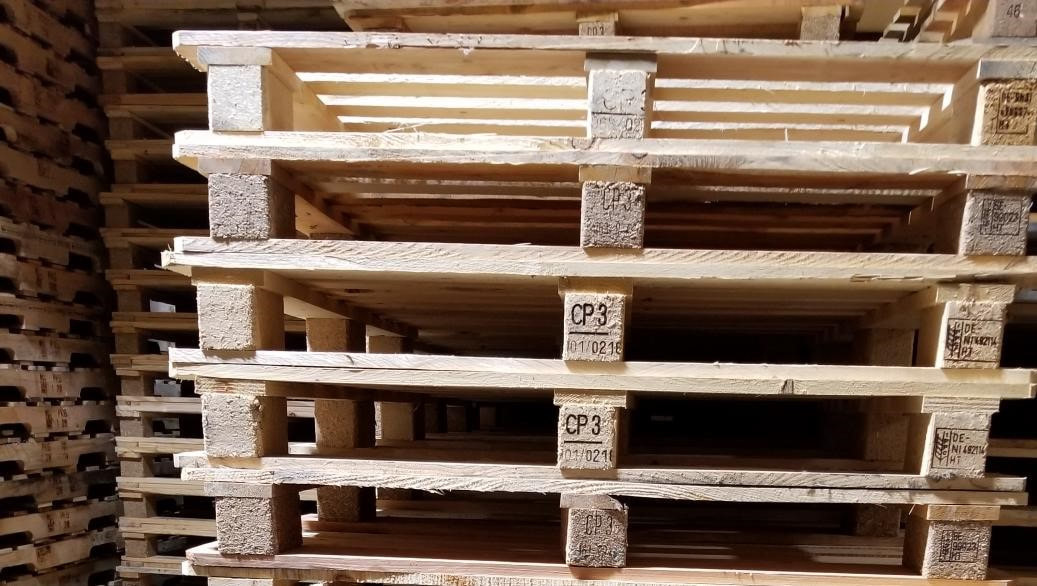
Stacks of CP3 chemical pallets ready for handling drums and bulk bags.
CP Pallets Provide Good Clearance
CP pallets have gained popularity in recent years for shipping internationally due to the compatibility of block pallet designs with both forklifts and pallet jacks. Some chemical pallets even share the same dimensions as two of the most widely-used pallet sizes (48" x 40" and 800mm x 1200mm).
Contrast chemical pallet designs to stringer style pallets. Cut out notches in the stringers help to gain 4-way entry with fork lifts, but not all pallet jacks fit under these notches. The clearance or room for a pallet jack to enter a block pallet is usually around 3 inches. A stringer pallet, on the other hand, only provides about 2 inches of clearance through the notches.
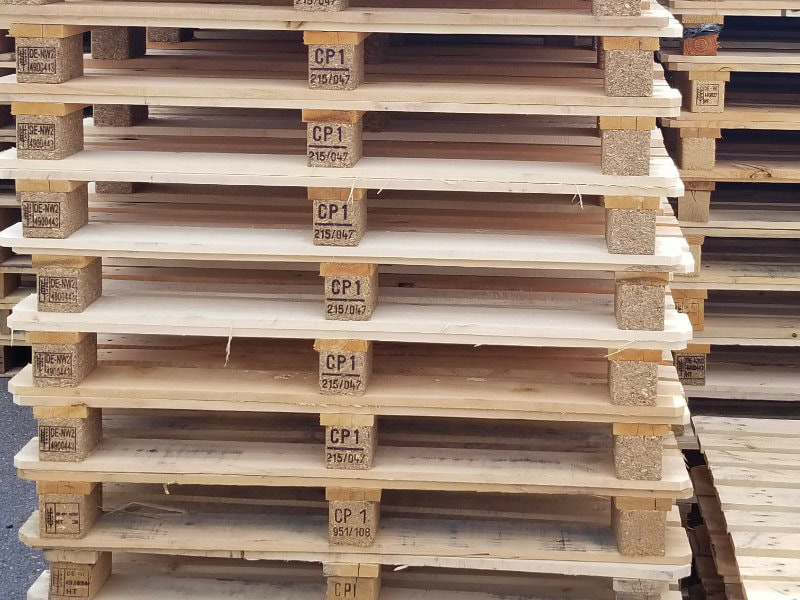
The CP1 chemical pallet is similar in size to the US 48x40 GMA pallet.
The Most Popular CP Pallets
The three CP pallet styles below are most popular because they can often replace standard US and Euro pallets. Let's explore how you might use these CP pallets:
- CP1
1200mm x 1000mm (47.25" x 39.38")
Used for stacking cans, boxes and Super Sack® bulk bags. CP1 pallets have three bottom deckboards. This design is becoming popular in the United States because it is similar in size to 48 x 40 GMA pallets. Products can often be packaged in the same manner to fit either pallet. - CP3 and CP9
1140mm x 1140mm (44.88" x 44.88")
These square pallets are similar in size to a US 45" x 45" pallet. CP3 pallets and the CP9 work well for stacking and shipping drums and bulk bags. Both designs also pair well with octabins. The primary difference between the two models is the pallet base. The CP3 has 3 bottom boards and the CP9 has a perimeter bottom. Check out this new CP9 pallet made from plastic.
Using CP Pallets
With 9 different models of CP pallets available, it is very likely that a CP pallet could work for most standard-size shipments. The most readily-available designs in the US include the CP1, CP3, CP7 and CP9. When shipping internationally, it can be beneficial to ship an easy-to-use block style pallet - just in case the pallets have to be moved with a pallet jack. Working closely with your pallet supplier can assist in choosing the right CP model to fit your packaging needs.
Beyond equipment compatibility, you must consider ISPM-15 requirements if you are exporting wood packaging. CP pallets are often made with dry pine (and for good reason). The heating process for removing moisture from pine exceeds heat treatment (HT) requirements set by IPPC. That said, always seek advice on current regulations before exporting - even if you see a manufacturer's HT Stamp clearly stenciled on both sides of CP pallets.
Will CP Pallets work for you?
So now you know that CP pallets are not restricted to the chemical industry. Give it some thought. How could CP pallets work for your products?
Do you package products in some of the same sizes as the CP pallets? Let's connect. Tell us about your product and current pallet below and we'll help you choose the best CP pallet for your application.
Updated: 01/26/2026 | Published: 07/14/2016
by Jonathan Haynes
on Technical Center