Pallet Lead Boards
Why are Lead Boards on a Pallet so Important?
Located at the outer edges of a pallet, lead deck boards perform critical functions in material handling and product protection.
The lead boards on a wooden pallet are the deck boards that are located at the leading edges of the top and/or bottom of wooden pallets. These outer boards add strength to the area of a pallet most vulnerable to repeated and damaging impacts from forklifts and other equipment.
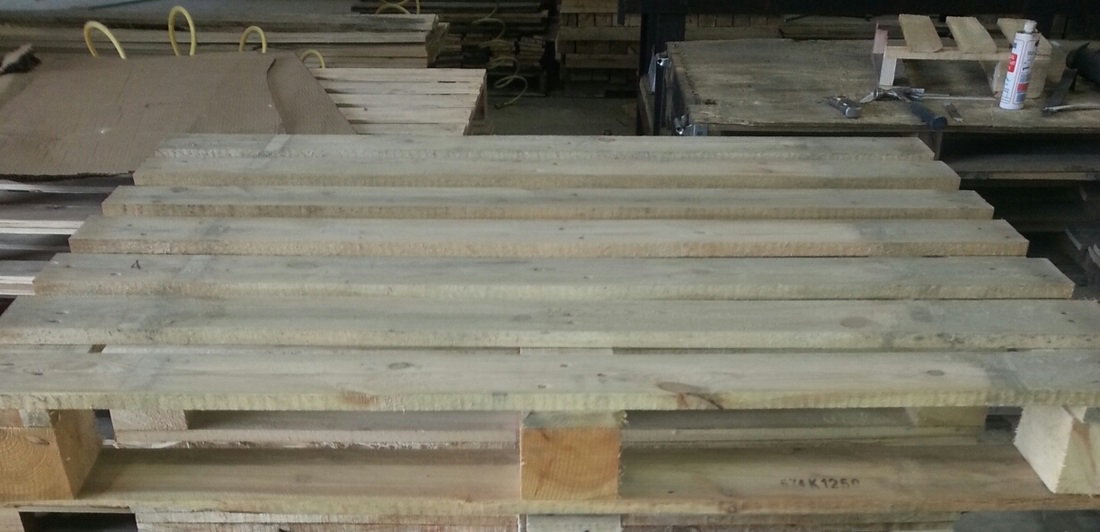
Often wider than internal deck boards, lead boards help to prevent breakage during handling.
Limiting Pallet Damage with Lead Boards
When pallets are damaged during handling, the harm almost always occurs to the leading deck boards. Because of this, there are several improvements that can be made to a pallet design in order to alleviate lead deck board damage. Below are some ideas to consider:
High Quality Nails
Make sure that high quality nails and the maximum number of nails for this joint are being used.Stronger Wood
Specify a stronger wood to be used in the lead deck board position.Wider Board
Try switching to a wider lead board. The most common width for this is between 5 1/2" and 6", though wider material may be available from your supplier.Butted Board
Add a second "butted" board directly behind the lead board. The butted board is most often narrower and helps create an even stronger perimeter.Alternative Materials
Consider the use of an alternative material such as extruded plastic or engineered wood.
Extend the Life of your Pallets
Lead boards are important because they protect the product on the pallet during material handling. Understanding the importance of the lead board can save you a major product damage headache. Plus, a properly optimized lead board will help extend the life of your pallet.
Want advice on lead boards for building better wooden pallets? Let's connect. Tell us about your your current pallets and the damage you are experiencing.
Updated: 09/24/2025 | Published: 04/09/2015
by Rich Reiher
on Technical Center