

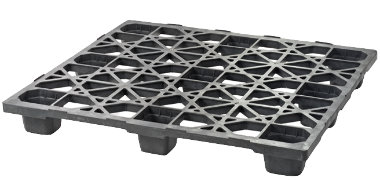


First, consider how long you will be storing pallets made from wood. For short-term storage of a few months or less (most pallets out there), the effects of outdoor storage such as moisture, sun, snow, etc. will usually not have an adverse effect on wooden pallet performance. But, long-term storage under poor conditions can lead to pallets that “look” bad, grow mold and can even become rotten and unsuitable for use.
4 Tips for Preventing Wooden Pallet Rot
If you need to store wooden pallets for long periods, try these tips to help make sure your pallets stay fresh:
-
Keep Pallets off the Ground
The bottom pallet resting directly on the ground, even in a paved lot, can lead to rotten bottom boards under long-term storage. Placing pallets on 4×4’s or similar dunnage allows the bottom pallet to dry between rains, etc. and will significantly increase pallet life. -
Ensure Proper Airflow
Pallets can be stored outdoors for longer periods if the air moves through them to dry out the boards. Be aware that even indoor storage in a tight, damp area can lead to rot. -
Rotate the Stock
When you bring in a new load of wooden pallets, make sure you use the older pallets from the back of the row before moving to the new ones. -
Move the Pallets
If you have a design that is not going to be used for a few months, it is best to move the stacks around periodically. If the pallets are stacked 20 high, take off the top 10 and put them on the bottom. This changes the position and ensures no one pallet is in an overly-moist environment as compared to the rest.
How can I Tell if a Wooden Pallet is Rotten?
If you have pallets that are questionable, hit the boards with a hammer. Rotten boards will break in a straight line and appear “brittle”. You can break good boards with enough force, but the wood will break in a splintering manner. It takes a lot of force to break a sound board even with a hammer.

Check wooden pallets for rot damage before using to avoid accidents and injury.
Do not use a questionable pallet, as the potential for additional damage to products or people is not worth the savings. If ever in doubt, contact your pallet supplier to test older pallets to ensure they remain safe for use.
Are your Wooden Pallets Rotting?
Your storage conditions may be causing your wooden pallets to rot. Want to find the cause? Let’s connect. Tell us how you currently store your wooden pallets or ask questions below.
If you work with heavy rolls of foil, film, paper, plastics or other high-value material, you know that damage during transport or storage can make the product unusable. That’s a costly mistake no one wants to make. Custom solutions like the ones we show below can help prevent callbacks.
Shipping Roll Products
To develop a better protection system for transporting factory rolls, everything from the roll properties to customer requirements must be considered. A minor dent is not so minor when it causes thousands of dollars in loss. Equally cringe-worthy is a load that shifts during transport and causes product to open or roll away.
There are three main ways to ship rolled products:
-
Vertical Rolls
Vertical Rolls put the least stress on a pallet or platform. This solution is best suited for rolls that can handle being shipped in an upright position. Advantages include lower-cost pallets and minimal unitizing to keep the roll(s) secure on the pallet. -
Cradle Supports
Cradle supports work best when rolls can withstand pressure from the pallet or packaging and can ship in a horizontal position. This option requires more pallet support and some type of “cradle” to hold the roll secure. Made from wood, plastic, foam or paper, cradles can be permanently attached to the pallet or added at time of shipping. -
Suspended Rolls
When rolls cannot withstand pressure from the pallet, they are suspended. Roll cores are typically attached to header boards at each end to keep the roll suspended above the pallet. While this is the most protective shipping method, the strength and stiffness requirements for the pallet are much greater. Extra nails, wider boards at tine tips and other securement reinforcements help prevent any part of the pallet from touching the roll during handling.
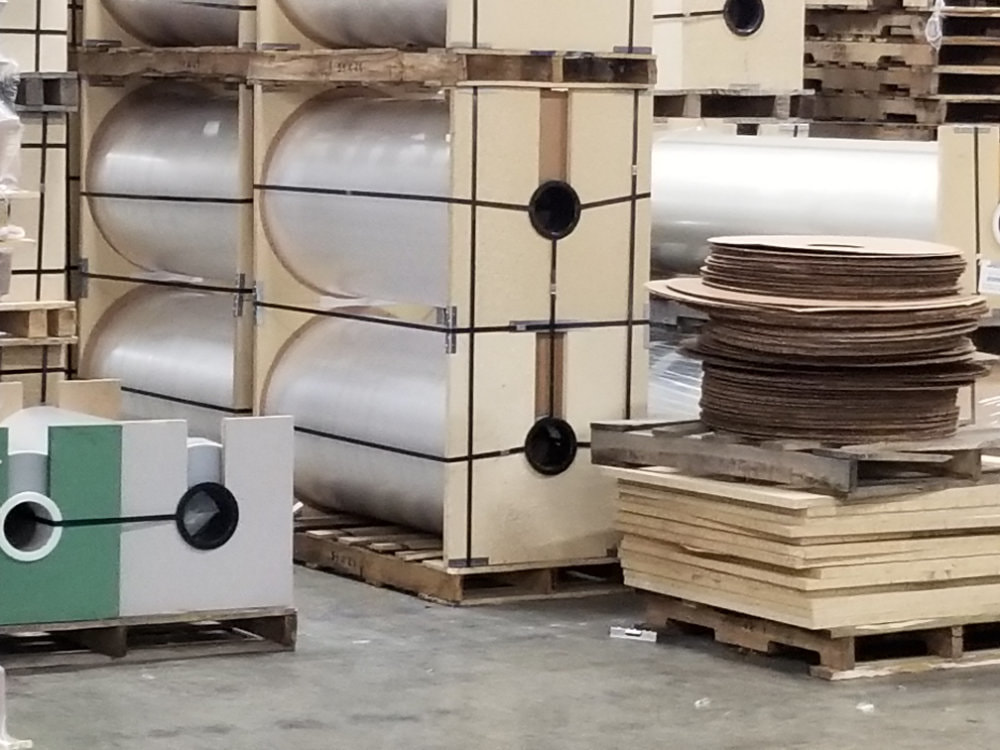
Suspending rolled product between boards and above the pallet prevents impression damage from handling pressure.
Maximize Protection while Minimizing Cost
If you are experiencing too many callbacks due to roll damage, it may be time for a change. And not just for damage control. Shifting over to a better roll pallet design can also save time by streamlining the palletizing process. Delivering products on time and in pristine condition saves money plus offers a competitive advantage.
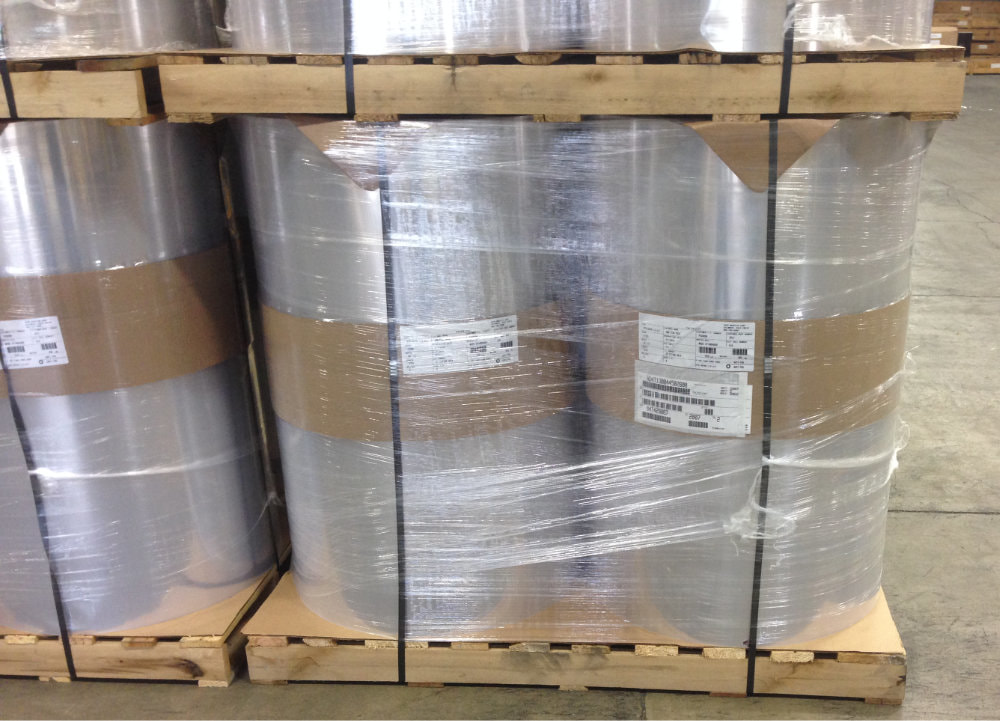
If the product is not highly susceptible to damage, placing rolls in a vertical position on the pallet often saves money.
Reduce Rolled Product Transit Damage
How many callbacks are you getting for rolled product damage? Tell us about the damage you’re experiencing below and Let’s connect to find the best packaging solution to ship and secure your valuable rolls.
Putting a nail or screw into a wooden pallet sounds simple enough, but it can actually get quite technical. When there is a failure, a good set of photos is often enough for an engineer to identify if the problem is the fastener or something else entirely.
Choosing the Right Fastener
There are many measurements that determine the withdrawal strength of a nail. The snapshot above details four different types of fasteners. In general, helical (screw) nails are better suited for harder wood species, and annular (ring) nails hold better in softer species.
Here are some more notes:
-
Most Common Nail Spec
Most pallet specs do not include enough information to guarantee a good fastener. The most common nail spec we see is 2-1/4″ Helical nail. This can be everything from a very good nail with very high withdrawal strength to a very small diameter nail that is little more than a big tack. -
Cheap Nails
Moving from a cheap nail to a good nail only adds about 2% to the pallet price, but will double the life of a pallet. The cost vs performance tradeoff of a good nail is often a great deal. This is true even with one-way pallets because you’ll see fewer failures and better handling in the field. But, if a pallet user does not require the better nail, they will likely get the cheaper ones.
Common Fastener Failures
Following are a few insights on fastener problems and solutions for wood stringer style pallets:
-
Broken Deckboards
If deckboards are broken, the fastener likely did its job and the boards were too weak for the application. You need a stronger deckboard (thicker, wider, hardwood, etc.). -
Boards Pulling from Stringers
If you have good boards pulling from the stringers (and you see nail points sticking from the boards) then the fastener pulled out of the stringer. The nails did not have enough withdrawal resistance for the application.
Specifying Minimum Performance Requirements
The best way to spec a nail is to give some guidelines, such as “2-1/4″ helical”, and then also reference the Uniform Standard for Wood Pallets. This standard specifies minimum performance requirements for withdrawal in nails. Unfortunately, many pallet manufactures do not use this standard and may continue to use a sub-performance nail.
Are fasteners the issue in your pallet failures? Let’s connect. Tell us about your pallet performance issue below and we’ll help figure out if fastener withdrawal is contributing to the issue.
Mold is one of many issues that all pallet users face. This is especially true in summer or any time environmental conditions combine heat and moisture.
Pallet Mold is a Major Issue
Stretch wrap is a great tool for unitizing pallet loads, but it can introduce mold problems. Worse, stretch wrap can even cause the mold to transfer onto your product. No one wants that.
Here are some things to know if you are running into issues with pallet mold:
-
Mold is Everywhere
Mold spores are found everywhere. They’re just waiting around for the right conditions to grow. Pallet users need to make sure they are practicing proper storage and handling processes to avoid mold. These actions include maximizing air flow through pallets. Proper airflow allows pallet surfaces to dry, making them less favorable to mold growth. -
Stretch Wrap on Wood Pallets Facilitates Mold Growth
One of the best (worst) ways to help mold grow is to wrap wood pallets with stretch wrap. Stretch wrap is an impermeable plastic cover that both restricts air flow and traps moisture. Even if the surface of the wood is dry to the touch, there is likely moisture locked deeper in the wood. As this moisture comes to the surface it can get trapped by stretch wrap. And just like that, you have created an ideal surface for mold growth. -
Hot and Humid Environments Contribute to Mold Growth
Even if you store pallets in a covered and well-ventilated area, elevated temperatures and an increase in humidity (especially during summer months) can introduce mold growth. Mold thrives between 77 F and 86 F. Many locations across the US have average summer temperatures and sweltering conditions on par for mold growth.
How to Stop Mold Growth on Pallets
Now you know that wrapping your wooden pallets with stretch wrap can create the perfect storm for mold growth. Under some conditions, the moisture trapped within a stretch-wrapped load can spread mold on all packaging materials. Worse, there is the possibility that your product can get damaged by mold too. This can create cost issues.
The stretch wrap practices that worked during the winter may need to be modified for the summer. While it is possible to use stretch wrap in warmer temperatures, your unit load practices should be carefully monitored. This will help ensure your pallets and your products remain mold free.
Got Mold on your Pallets or Products?
You might need to reconsider your unit load methods, especially if conditions are ripe for mold growth. Need help? Let’s connect. Tell us about your pallet mold issue or ask questions below.
The Problem: pallets were not flowing as intended within a warehouse flow rack system. Even worse, the pallets were actually damaging the rack system components. The system was rated to support much heavier weights, but something was causing higher than expected stress between the loaded pallets and the flow rack.
Skate Wheel Damage
The flow rack at this particular warehouse is a common type of high density pallet storage system. To keep things rolling, the pallets are supported by the 3 rows of skate wheels.
On paper everything added up. We had a flow rack system that was strong enough to support the loads. And, we had a heavy duty wood pallet that was strong enough to support the loads. But something was not working well together resulting in damage to the skate wheels.
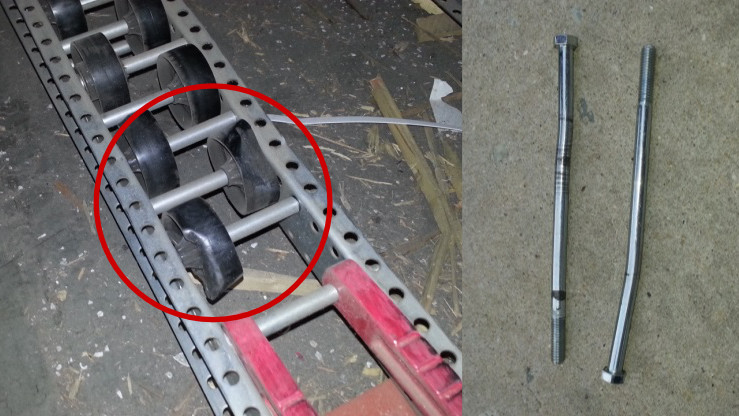
The pallets were damaging the skate wheels. Bolts that held some of the wheels were being bent by the loaded pallets.
Tech Center Evaluation
During our evaluation, we keyed in on one main area where these two components did not “match” – the middle of the rack.
The outside skate wheel rails were directly under the rigid pallet stringers (2×4’s). The outer skate wheels were not over stressed, and these rows were not damaged. The middle rail, however, was under deckboards only and between the rigid stringers. These deckboards were bending under load around the middle skate wheels. This resulted in the rack component damage and a system that did not flow as intended.
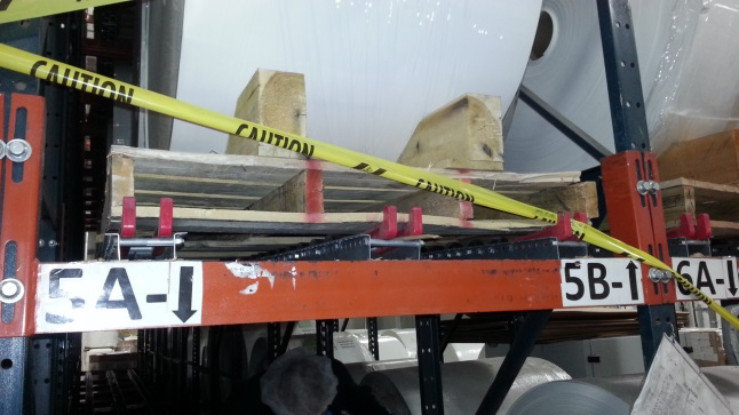
Pallet deckboards were bending under load preventing proper flow and causing damage to the middle skate wheels.
Tech Center Solution
Our team at The Nelson Technical Center takes a systems approach to solving complex transport packaging problems. We always make sure the pallet, packaging and equipment work together seamlessly. This means taking even the smallest details into full consideration.
In this case, after a thorough technical evaluation, we made two recommendations to stop damage to the flow rack system:
-
Increase Skate Wheels
Use two center skate wheel rails, rather than one. This allows the pallet to be supported by wheels under each of the four stringers. -
Change Pallet Design
Convert to a three stringer pallet with a middle stringer directly over the middle rail.
A Change in Pallets Saves
Since the rack system was already in place, the more economical solution was to change the pallet design to a three stringer design. We used wider stringers to maintain the previous durability levels, and the rack damage issues and flow issues went away.
Is your rack system getting damaged? Let’s connect. Tell us about performance issues with your pallet racking system below.
The most common sheathing materials used for wooden crates are plywood and OSB panels. What’s sheathing, you ask? Sheathing just means outer layer. If you need a sheathed crate, how do you know which material is best for your application? Let’s dig in.
Plywood vs OSB
For BOTH plywood and OSB, layers are rotated 90 degrees so that the overall panels have strength, stiffness and stability in all directions. Most of the panels used in pallets and crating are industrial grade and similar to that used in the housing industry. Below are the differences in how they are made:
-
Plywood
Made from layers (usually 3 to 5) of thin wood veneers glued together to form a thicker panel. -
OSB
Made from layers of large chips, glued together to form a thicker panel.
How to Choose between Plywood and OSB
Within the housing industry, plywood and OSB are considered interchangeable. That’s because the load ratings are usually based on the panel thickness, rather than materials. As your second reminder, plywood and OSB are NOT interchangeable when we’re talking pallets and crating.
Here are some factors to consider:
-
Durability
For outdoor applications under damp conditions, plywood is more durable than OSB. Standard OSB panels will degrade over time, so plywood wins for outdoor use. -
Strength and Stiffness
There’s really no difference in this category. -
Appearance
Plywood wins for most applications. The finished plywood unit has a smooth appearance and is more aesthetically appealing to most users. -
Weight
Again, very little difference in this category. -
Cost
Usually OSB wins here. Most of our OSB is used in the more cost-sensitive applications, where performance and durability are required, but a lower price is a high priority. While the costs of plywood and OSB fluctuate, OSB is almost always the winner in the price factor.
Still Unsure about Plywood vs OSB for Crating?
Still not sure if plywood or OSB is best for your sheathed crates? Let’s connect. Tell us how you use wooden crates with your product or post your questions below.
If your wooden pallets do not comply with ISPM-15 regulations for overseas shipments, you could be facing a nightmare. Don’t despair. We have created a list of 3 ways to avoid ISPM-15 export issues.
3-Point List to Prevent International Shipping Issues
-
Consider Alternative Materials
Easiest way is to use non-wood pallets such as plastic pallets or corrugated pallets. These are exempt from ISPM-15 requirements and do not require any markings or treatments. -
Double-Check the Details
For solid wood pallets, make sure you follow ISPM-15 guidelines. Most issues result from the small details. These could include not having ISPM-15 stencils on BOTH sides of the pallet or crate. Or the stencils might be illegible. It is a good idea to check your packaging as it is loaded into the container as a final quality check to make sure things are in compliance. -
Work with a Knowledgeable Supplier
Your best bet to make sure your packaging complies is to choose a reputable wood pallet supplier that stays current with the latest ISPM-15 regulations. Make sure the supplier knows exactly which countries you are shipping to. Some countries have additional bark or paperwork requirements. Companies like Nelson pride themselves in understanding the issues and complexities of the ISPM-15 program.
Export Wooden Pallets with Confidence
Using the list above can help get you started with navigating the ISPM-15 program and prevent shipping issues. But, if you still have ISPM-15 questions or you want more information about how to avoid issues when exporting wood packaging, let’s connect.
The goal of a pallet test is to compare performance results of different designs and materials. While there are numerous laboratory tests, the most important evaluations focus on pallet strength, durability and functionality.
Is your Pallet Design up to the Challenge?
Everything from transportation and handling hazards to natural enemies like moisture and temperature can put pallets at risk. A failure anywhere in your supply chain immediately disrupts operations and jeopardizes profits. Scary, right?
Reduce Risk with these 3 Important Pallet Tests
-
Strength
Will the pallet hold the expected load?Testing the strength and stiffness of the pallet is vital for the unit load. This is commonly categorized into three load ratings:
Static Compression
The amount of weight the pallet will hold in a stationary position on a flat, fully-supporting and non-yielding surface. Example: pallet on the floor of a warehouse.Dynamic Compression
The amount of weight a pallet will hold while subjected to active stresses. Example: pallet in a truck subjected to the additional load strains produced from vibration.Racked Compression
The amount of weight a pallet will hold while not fully supported. Example: pallet in a storage environment partially supported, as in a warehouse rack or conveyor system. -
Durability
Will the pallet last throughout the expected handling environment?During the handling environment the unit load will encounter many hazards: forklifts, vibration, compression and more. The pallet must be durable enough to withstand multiple threats at the same time during one trip. One-way pallets are not intended to be recovered; therefore they only need to withstand one trip. Multi-trip pallets will be used for multiple trips, either as a captive pallet or expected to be returned and reused.
-
Functionality
Will the pallet be compatible with the handling environment?Though functionality may not be “tested” within the laboratory, the results are critical for the pallet to meet the expectations. The pallet may need to meet specific regulations such as government, pests, heat treated and fire safety. The pallet will need to work within a specific set of limitations such as size, automated equipment and warehouse space.
Is it Time to Test your Pallet?
Maybe you’ve already experienced a pallet failure. Maybe your customers are filing damage complaints. Or maybe, you’re launching an exciting new product. Minimize your risk of future loss or needless damage by testing your pallet.
Share your pallet failure details down below and let’s connect. One of our Nelson Technical Center experts will be happy to evaluate and help identify any issues within your system.
Most shippers export some, if not all, of their products on pallets. There are international regulations that govern the shipment of wood packaging materials (WPM) which are implemented to reduce the transfer of unwanted pests between countries. The regulation that governs WPM is ISPM-15, International Regulation of Wood Packaging Material in International Trade.
HT Stamps and More
Plywood and OSB panel pallets are exempt from ISPM-15 and do not need additional treatments like heat (HT). This means they do not need to be stamped. However, not having the stamps can lead to delays when the import inspector does not understand the material is exempt from ISPM-15.
Even with proper treatment of wood pallets, or exempt plywood pallets, you are still at the mercy of the import country inspectors. Stories abound of paperwork issues, missing HT stamps, illegible HT stamps, etc. For that reason, some companies use plastic, corrugated, or steel pallets that are clearly free of pests and exempt from ISPM-15 regulations.
If a unit load is non ISPM-15 compliant, it is usually detained in the receiving country. This means the cost and time needed to resolve the issue is up to the local inspector. Clearly, it is in your best interest to do your homework up front to prevent inspection issues.

An ISPM-15 stamp includes the IPPC logo, country code (US) and treatment (HT).
How to Prevent Pallet Export Issues
An ISPM-15 stamp certifies your WPM meets standards set by the International Plant Protection Convention (IPPC). Here’s how you can best prepare for exporting:
-
Use a Reputable Supplier
Make sure you are working with a reputable pallet supplier that can provide ISPM-15 certified heat-treated pallets. -
Stamp Both Sides
Make sure your wooden export pallets are clearly and properly stamped on both sides of the pallets with the ISPM-15 mark. -
Get your Paperwork in Order
Ask your pallet supplier if there are any additional regulations or paperwork required for your country of import. -
Do Not Modify your Pallet
Make sure your internal team does not modify the pallets (extra boards, crating, etc.) onsite. This invalidates the pallet stamps and will likely lead to issues at the country of import. -
Consider Wood Alternatives
Plastic is usually the alternative material of choice if you want a non-wood pallet. The cost of plastic pallets is low enough that, in some cases, they are similar to wood.
Wooden Pallets Getting Held up at the Border?
If your wooden pallets or packaging are routinely delayed by border inspectors, you already know it’s an expensive hitch to exporting. Want to eliminate the cause? Let’s connect. Tell us about your own ISPM-15 nightmare or ask questions below.
The Nelson Technical Center encountered a wood pallet problem that was not only causing a big headache but was also costing our customer valuable time and money. Nobody liked that. Turns out, heat and cold were to blame.
The Pallet: OSB Top Deck
The pallet was a solid wood block-style pallet with an OSB panel for the top deck. Usually, a bowing pallet is not a big issue. Once you load product on most pallets, the weight will flatten out any bowing. In this case, an empty single-bulk corrugated box was to be glued to the panel deck pallet.
When the box touched the middle of the pallet, it was lifted 1/2″ from the pallet on the sides. Unable to glue the box, the customer could not ship the empty boxes to the next location for loading in product.
The problem was new. The customer had never before experienced this issue. Nelson went to the customer site to inspect the load.
The Culprit: Cold Weather
Some onsite troubleshooting led to the following discoveries. One discovery in particular proved to be crucial for identifying the issue. Here is what we found:
-
The box did indeed lift about 1/2” on the sides.
-
All pallets from older loads (some were still at the customer warehouse) were slightly bowed too.
-
Some of the older pallets had plywood panels rather than OSB.
-
Both plywood and OSB panel pallets revealed bowing issues.
-
The pallets were flat when assembled.
-
The problem load was made during a very cold month.
The Solution: HT Assembly Changes
After further investigation into the effect of the heat-treating (HT) process on OSB, The Nelson Technical Center discovered that OSB is likely to bow during the (HT) process. Since these pallets were made in very cold weather, we suspected the bow was worse because they were in the HT process longer than the previous pallet loads.
Here is how we fixed the problem:
-
By removing the OSB panels, the base pallet immediately returned to a flat pallet.
-
The OSB top panel was then reattached to the flat pallet for a flat OSB pallet.
-
Going forward, the OSB panel is added AFTER the base wood pallet goes through the HT process.
The Follow-Up: Success
Reworking the load worked. Since changing up the order of heat treatment vs OSB attachment during the manufacturing process, no further bowing issues have occurred.
OSB Panels Bowing?
Have bowed or warped pallets ever caused your company problems? Let’s connect. Tell us about your problem or ask questions below.