



And, let’s be real. The bean counters are always on you to find the best price, amirite? We can do you one better. We’ll match you with the best value pallet. What’s that? That’s experience talking. I’ll explain.
This post is part 10 of a 10-post series on Plastic Pallets 101. (Part 9 highlights the advantages of using plastic pallet experts like the ones at Nelson Company.)
How to Save on Plastic Pallets
Anyone can sell you a pallet at the best price. Experienced pallet experts know how to save you money. It’s a crucial difference and a skill that comes with experience.
What exactly is experience? Albert Einstein probably said it best with these two quotes, “information is not knowledge” and “the only source of knowledge is experience.” Quick point of trivia… Einstein was born 145 years ago in 1879. Our company founder was born just four years later. So yeah, we’re building on 100 years of material handling knowhow.
To save on plastic pallets, you need a solution that will stand up to the rigors of your load and handling environment. Always be ready to answer, “where’s the pallet going and how?” Remember, a cheap pallet very quickly becomes an expensive mistake when it fails.
Applying 100+ Years of Experience to Pallets
If you’ve been keeping up with our blog, you know that wooden pallets first gained traction during World War II (about 85 years ago). Before that, product was moved by hand in barrels, sacks, crates and boxes (like the wooden tinplate boxes that established Nelson Company headquarters in Baltimore.)
While plastic pallets did not practically hit their stride until the late 1990s, earliest designs are believed to have gotten underway near the end of WWII. Our experience in unit load design and wooden pallets easily extended into plastics. After successfully placing plastic pallets in circulation for several years, we officially launched a plastic pallets division in the early 2000s. That’s nearly a quarter of our century-long history dedicated to plastic pallets.
Are you ready to put experience to the test?
Tell us about your unit load and challenges. Let’s connect below. One of our experienced pallet pros will show you how to get the greatest value by choosing the right plastic pallet.
Nobody likes that. Chances are pretty high that our experts have been in your shoes before. That means we’re in a good spot to optimize your system in ways you haven’t considered.
This post is part 9 of a 10-post series on Plastic Pallets 101. (Part 8 focuses on how plastic pallets save money.)
Here’s Why you Need a Plastic Pallets Expert
Plain and simple, an expert can help you select the best pallet for the job. Plastic pallets from Nelson Company offer these 5 advantages:
- Expert Advice
Our expert advice helps customers like you avoid costly mistakes. Our work begins before your product is even placed on the pallet starting with this one question: “where’s the pallet going and how?” - 10 Shipping Points
Freight and logistics is a volatile industry. Rates continually fluctuate due to demand, fuel costs and more. Strategic shipping points save money. We have 10 of them – in and near major US cities. - In Stock
This is where we shine. By keeping the best selling plastic pallets in stock at our own warehouses, we’re better positioned to get you the pallets you need by the truckload or LTL. Maintaining our own stock has allowed us to “save the day” for many of our customers. - New or Used
We’ve got you covered whether you’re looking for new or previously-owned plastic pallets. In addition to our stock of new pallets, Nelson Company maintains one of the largest selections of used plastic pallets in the industry. We also buy used plastic pallets. - Return Program
Safeguard your pallet investment with our Return Program. Get help with logistics planning, loading, sorting, tracking and more. Take control and embrace the circular economy by reducing waste and getting more use out of your pallets.

Get More Expert Advice
A plastic pallet expert can solve your unique challenges. Be sure to catch our quick video on plastic pallets 101. In just 10 short minutes, we introduce you to even more basics about choosing plastic pallets.
If you have questions, let’s connect. Simply fill in your details below for expert plastic pallet advice.
If you’re like most folks, you answered price. If you give me just a few minutes of your time, I’ll show four different ways to save money when you buy plastic pallets.
This post is part 8 of a 10-post series on Plastic Pallets 101. (Part 7 is all about the benefits of plastic pallets.)
Price vs Savings
We’re a different kind of plastic pallet supplier. While other companies focus on selling plastic pallets at the lowest price, we set ourselves apart by matching our customers with pallets that deliver the greatest value. That’s an important distinction. Let me show you…
4 Ways to Save with Plastic Pallets
- Reduce Costs
The headcount on 1 truckload of nestable plastic pallets equals 3 truckloads of traditional pallets. That adds up to huge savings in transportation costs, especially with volatile fuel and trucking costs. - Reuse Repeatedly
It pays to run the numbers. If you’re still buying pallets on a cost-per-pallet basis, it may be time for a shift in thinking. Cost-per-use can often be measured in fractions of a penny over the useful lifespan of a durable plastic pallet. - Recycle (2 Ways)
First, sell back pallets in usable condition for another user to take a turn (or buy used plastic pallets yourself). Then, when the pallet reaches end-of-life, get paid for recycling scrap. - Return Program
When it makes sense, getting your pallets back with a reverse distribution return program can save hundreds of thousands of dollars – sometimes millions. It’s business as usual for you. We manage the rest.
Price Alone does not Determine Pallet Cost
No one likes paying too much. Using the wrong pallet may be costing more than you realize. Always make sure the pallet you choose can withstand the rigors of your shipping or warehouse environment.
If you’re ready to discover the best way your company can save on plastic pallets, let’s connect.
Let that sink in for a minute. Your morning coffee. That phone in your pocket. Those new tires on your car. Even the pulleys and electronics that took you safely up to the seventh floor in the office elevator. All of it. There’s a chance I’m not telling you anything new. But, have you ever asked why one company chooses wooden pallets and why another chooses plastic pallets?
This post is part 7 of a 10-post series on Plastic Pallets 101. (Part 6 examines plastic pallet destinations and handling.)
A Pallet is not a Pallet
Most pallets are made from wood. Wooden pallets dominate the market for good reason. Sometimes, though, it makes sense to explore other pallet material options like metal, corrugated, wood composites and the topic of this post, plastic.
What makes plastic pallets special? Drumroll please…
Top 6 Benefits of Plastic Pallets
- Strong
Use plastic pallets over and over again to support heavy loads on the floor or in the rack. - ISPM-15 Exempt
Free from export requirements, plastic pallets sail thru customs with guaranteed acceptance. - Lightweight
With many options less than 30 lbs, easily lift plastic pallets by hand plus save on freight. - Clean
Use a blower to remove dust or get seriously clean by power washing away contaminants. - Water Resistant
Protect loads and avoid damaging organic growth like mold and mildew. - Consistent
Since plastic pallets are manufactured from molds, you can count on uniformity in length and width.
Bonus Benefit
Plastic pallets are engineered for long life. Reusability is a benefit that shouldn’t be overlooked. When shopping for plastic pallets, ask your pallet pro to help calculate your cost-per-use. You may be surprised by the sizable savings of choosing plastic.
Want to learn more about how plastic pallets can benefit your company? Let’s connect. Drop me your details below to sample a plastic pallet today.
How are you ever going to narrow down your choices? Well, any good pallet pro will ask this important question, “where’s the pallet going and how?” It’s a great question for eliminating plastic pallets that won’t work. Just know there will probably be more to answer.
This post is part 6 of a 10-post series on Plastic Pallets 101. (Part 5 outlines common plastic pallet sizes.)
Plastic Pallet Destinations
The destination for your plastic pallet will often fall into one of two camps:
1. You Won’t Get the Pallet Back
- An export pallet or one that’s going one-way needs to be tough enough to safely do the job. Durable plastic lets you “send it and forget it.”
- Although any material can work, look for ACM or PO. This material has a lower lifespan, but also a lower price point.
- If the pallet is jetting off on a plane for export, lightweight plastic will help to keep your airfreight costs lower.
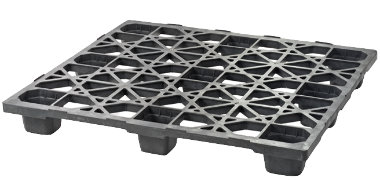
- Across town or across the globe, you’ll save with open-deck, nestable plastic pallets. This dynamic design duo uses less material for a lighter load and lower price compared to heavier pallets. Ship one-way using new or used plastic pallets.

The CP-4840-N-330 Plastic Pallet is a lightweight nestable pallet with an open top deck perfect for shipping one-way.
2. You Keep the Pallet In-House or Recover
- A captive or multi-trip pallet is heavy-duty enough to survive years of rough handling in your warehouse or bouncing between multiple stops in your system.
- Look for pallets made from HDPE or HDPP. Both offer long life. PE is most common and is the workhorse of warehouses. Choose the more rigid PP material if you’re placing these in an unsupported rack.
- Designed for reuse, a captive or multi-trip pallet may be priced higher, but over the life of the pallet, cost-per-use can often be measured in fractions of a penny. Buy new plastic pallets for your warehouse or choose multi-trip in used condition.

The CP-4840-FP-E6OD Plastic Pallet is ideal for closed loops in the Electronics, Food, Retail, Medical and Pharmaceutical industries.
Plastic Pallet Handling
Beyond destination requirements, consider your operating conditions:
1. What Equipment are you Using?
- Forklifts and pallet jacks may not be compatible with every pallet design. Know the capabilities of the equipment you’re using to move pallets.
- Ask about a pallet’s height profile and side openings to fit your specific equipment including conveyors, racking systems or automated palletizers.
2. What are you Loading on the Pallet?
- Know the load the pallet will be supporting. Securing 55-gallon drums on a pallet will have different requirements than boxes or bulk bags.
- Plastic pallets offer a multitude of Swiss Army-like add-ons including grommets, non-slip surfaces, stretch wrap hooks, safety rims and more for safer handling.
Don’t Forget to Test your Plastic Pallet
You think you’ve found a pallet that best fits your destination and handling situation. That’s great. You’re almost at the finish line. But, before you place that order, you may want to give that pallet a good test run. Why? Every load and system is different. And while everything may seem to line up perfectly on paper, something unexpected may be discovered during your real-world application.
Are you looking to buy plastic pallets? Let’s connect below. One of our pallet pros will help you get answers to the important questions.
These ratings let you know how much weight the pallet can handle in motion and at rest. These numbers are important to safety so let’s examine them now.
This post is an overview of load capacity ratings and is part 4 of a 10-post series on Plastic Pallets 101. (Part 3 addresses plastic pallet materials.)
How much Weight can Pallets Safely Hold?
Weight capacities for plastic pallets are typically issued by the manufacturer. Ratings for dynamic, static and racking capacities are set using a combination of mathematical calculations and the results of field and/or lab testing.
Dynamic vs Static vs Racking
Plastic pallets will always be rated for dynamic and static loads. Only pallets specifically designed to be used in an unsupported racking system will include a racking capacity. You can expect capacities to vary based on pallet dimensions, materials and design. And, you should also know that ratings are determined using evenly distributed loads.
Dynamic
- This is how much weight the pallet can support while in motion
- Think forklifts, pallet jacks and conveyors
- This number will always be lower than static capacity
Static
- This is how much weight the pallet can withstand at rest
- When stacking, this the total weight that the bottom pallet can support
- Static is always the highest of the capacity ratings
Racking
- This refers to the weight a pallet can manage in an unsupported rack
- Picture a loaded pallet bridging an open span between beams or other supports
- Racking capacities will often be the lowest rating
Sample Testing
Capabilities of pallets will vary per system or environmental conditions. For example, freezing conditions can make some pallet materials brittle. Even if your application meets specs, it is always advisable to consult with a pallet professional and perform sample testing before putting a pallet in use.
Want to know more about load capacities for plastic pallets? Let’s connect down below. Also, see our quick Plastic Pallets 101 Video. In just 10 short minutes, we introduce you to even more basics about choosing plastic pallets.
Each function typically relies on a specific design style to safely and efficiently get the job done. Use the guide below to dive into an overview of styles and the duties they carry out.
This post is part 2 of a 10-post series on Plastic Pallets 101. (Part 1 introduces plastic pallet anatomy.)
Find your Design
Matching your application with fitting design styles is just one step in selecting the right plastic pallet.

Nestable
- Have hollow feet (usually 9)
- Pallets fit snugly (or nest) one on top of the other
- Offers stack security when not in use
- Lightweight nestables save on space and freight
Stackable
- Designed to stack one load on top of the next
- Loads are often stacked 2-3 high
- Can be both a unit base and a divider for block stacking
- Both 3 and 6-runner bottom styles may be suitable


Rackable
- Think warehouses or Distribution Centers using racking systems
- Use with beam, edge, roller, push-back, flow, cantilever and supported pallet racks
- Stiff enough to bridge a span in an unsupported open rack
- Heavyweight to meet demanding load capacities
- Robust understructures in 3 and 6-runner designs
One-Piece
- Solid body construction with no seams or welds
- Reduces weak points
- Simpler design is easier to keep clean
- Popular with pharmaceutical and direct-contact uses
- Helps avoid pest and water intrusions


Reversible
- Also known as double-sided pallets
- Virtually identical tops and bottoms
- Always right side up (increase productivity)
- Not suitable for pallet jacks
Full Perimeter
- Think picture frame
- Rails or supports on all 4 sides of the base
- May have a 5th support or 6 rails (shown)
- Popular design for repeated use in warehouses or closed loops


Speciality Handling
- Virgin materials meet stringent hygiene guidelines for direct food contact
- Pharmaceutical pallets are suitable for heat sterilization
- Fire retardant materials meet standards for fire safety
- Freezer additives help to make plastic more resilient in colder temps
Learn More about Plastic Pallets
Be sure to catch our quick Plastic Pallets 101 Video. In just 10 short minutes, we introduce you to even more basics about choosing plastic pallets. If you have questions, let’s connect for expert plastic pallet advice.
Easy, right? Not so fast. Plastic pallets are available in a dizzying array of styles and options designed to work with specific loads, environments and equipment. How do you choose? The guide below will help you get started.
This post is part 1 of a 10-post series on Plastic Pallets 101.
Before you Buy
Before making a purchase, you’ll need answers to multiple questions including: what are you putting on the pallet top? How will you store or transport palletized loads? What equipment will you use to move the pallets? Answers to these questions and more will help match you with your best choice in plastic pallets.
Plastic Pallet Top Deck
The top deck is the surface that interfaces with your unit load. Top decks usually come in one of two designs plus many options:

Open Deck
- Also called ventilated or vented
- Allows for air flow to help reduce moisture
- Works well for strapping
- Lighter weight (less material) makes it export friendly and cost effective
Closed Deck
- Sometimes called a solid or flat top
- Helps contain loads that may spill (ex: big bags)
- Provides a more stable platform for racking

Top Deck Designs and Options
- Non-slip surfaces
- Grommets and other inserts
- Hooks for stretch wrap or straps
- Intermittent or full-perimeter safety rims
- Spill containment channels
- Rod inserts for added strength
Plastic Pallet Bottom Deck
The bottom deck is the understructure for supporting the load above it. Choosing a base style is determined by your storage and handling requirements. Snap-on bases offer the benefit of lower shipping costs when unassembled. One-piece plastic pallets may increase capacity for heavier loads.

9 Feet
- Also known as 9 block, 9 leg or 9 foot
- Hollow feet reduce weight for airfreight
- Nesting empty pallets saves space and freight costs
3 Runner
- 3 unidirectional supports (usually on the long side)
- Works well for edge racking systems
- Suitable for double stacking


6 Runner (FP)
- Often referred to as full perimeter (FP)
- Includes 4 perimeter + 2 cross supports
- Also known as cruciform base for its cross shape
- Good match for double stacking unit loads
Other Bottom Styles
- 2, 4, 5 and 8 Runner
- 6 and 12 Feet
- Reversible (not suitable for pallet jacks)
Plastic Pallet Sides
This is where the tines of forklifts and pallet jacks need to fit for lifting and moving pallets. Differences in pallet height and width of openings can make the difference between working with your handling equipment and not. The two most common sides include:
2-Way Entry
- Openings on 2 opposing sides of the pallet
- Less common in plastic than wood

4-Way Entry
- Most popular design in plastic
- Offers convenience of entering pallet from all 4 sides

Learn More about Plastic Pallets
Be sure to catch our quick Plastic Pallets 101 Video. In just 10 short minutes, we introduce you to even more basics about choosing plastic pallets. If you have questions, let’s connect for expert plastic pallet advice.
Watch our video for a quick course on everything from styles and materials to the safety and money-saving benefits of using plastic pallets. Below the video is a brief summary of the topics we cover with timestamps for skipping to a specific section.
This video post is an introduction to our 10-post series on Plastic Pallets 101. Go through the posts in order or jump right to the parts that interest you most.
You’re new to Plastic. Let’s Change that.
In this video, you will learn all about:
- Plastic Pallet Anatomy [0:21]
Compare top deck, side entry and popular bottom deck styles. - Functions & Designs [1:15]
Confused about the difference between nestable, stackable and rackable plastic pallets? Learn the differences here. Specialty pallets for specific handling requirements such as fire safety, direct food contact and freezing temperatures are also highlighted. - Plastic Materials [2:58]
Learn when you should choose a pallet made from ACM, HDPE or HDPP plastic material. - Load Capacities [4:22]
Safety first. Dynamic, Static and Racking capacity ratings are defined here. - Common Sizes [5:05]
The standard size for plastic is 48×40. We highlight 5 other common industry pallet sizes including Euro, automotive, bulk bag, chemical and drum. - Destination & Handling [6:29]
Where’s it going and how? Everything you need to consider from export and warehouse use to the handling equipment and extra safety options. - Plastic Benefits [7:41]
Plastic pallets can support heavy loads, make exporting easier and all around improve handling. - Ways to Save [8:29]
Check out how plastic pallets help you reduce, reuse, recycle and return for saving money and helping to reach sustainability goals.
How we can Help [9:35]
Avoid costly mistakes with expert advice from a company like ours. Nelson has been solving complex materials handling problems for more than 100 years [10:18]. Let’s connect or request your quote for plastic pallets today.
How they’re sitting and where they’re going are both important details for choosing the right plastic warehouse pallet. Let’s take a look at some questions that will help point you in the right direction.
What are Warehouse Pallets?
In broad terms, plastic warehouse pallets are strong enough to carry the designated load and rugged enough to keep up with repeated use and hard knocks by forklifts, pallet jacks and other material handling equipment. Now let’s get into some of the finer details for choosing warehouse pallets.
-
Are you Racking the Pallets?
Looking at rackable plastic pallets is a good starting point, but you have to take it a step further. Are we talking supported or unsupported? Not sure? Ask me about the seven most common racking systems. -
Do you put Pallets on a Conveyor?
Standard and speciality plastic pallet designs can all work with conveyors. Choosing between nestable, stringer or something else depends on both your load and system for allowing the pallet to roll down a belt or flow down a rack. -
Are you Stacking the Pallets?
Does your warehouse double stack or block stack? You may be able to go with a lighter-weight pallet for easier handling. Just make sure you qualify the static load before making your choice. If you’re working with bulk bags, you’re likely looking at plastic pallets with square dimensions. -
Are you Keeping the Pallets?
If your warehouse pallets will stay in-house or in a closed loop system, your focus should be on durable HDPE or HDPP plastic materials to get the longest life. If you’re exporting (or don’t expect the pallet to return after shipping) you can consider a shorter-life material like ACM or PO.
Don’t Forget the Load
Your pallet load is especially important and this is where plastic pallet material choices come further into play. How much does the load weigh? Is it evenly distributed? Is the pallet material stiff enough if you’re racking? Strong enough if you’re stacking? Is your load boxed, bagged or something else? Does your load include food or Pharma ingredients? (You may need a virgin plastic for direct contact.) Overwhelmed? Don’t worry. Your pallet professional will help you answer these questions and more to fit your application with the right warehouse pallet.
Are you using plastic pallets in your warehouse? Let’s connect. Tell us how you’re using them or ask questions below.