



It works, but as the cycle repeats (and repeats, and repeats) you keep wondering if you’re leaking profits.
We have all heard the definition of insanity, “doing the same thing over and over and expecting different results.” This is Bill Murray’s character, Phil in the 1993 movie Groundhog Day. It takes Phil most of the movie to understand this.
Get Better Results
Companies spend a lot of money attempting to achieve different results. They implement new processes and hire consultants. Plenty of questions are asked, but then things stall.
You may have tried the “5S Organization” process for systematically eliminating waste and improving flow. Or maybe you considered the “5 Why’s” strategy for problem solving and decision making. These are great tools, but are you asking the right questions to break the endless Groundhog Day loop?
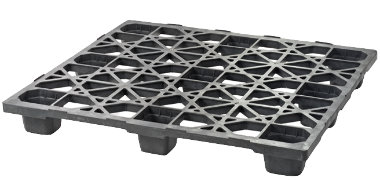
Ask the Right Questions for Getting a Better Pallet
- Shipping Cycle
Is my shipment a one-way trip or will the pallet get reused at the destination or returned? This can truly add value to the delivery and lower your cost per shipment. But, what will it cost? Don’t guess, run the numbers! - Weight
How much weight is being applied to the pallet? Is it evenly distributed, and how will it be handled? Am I choosing a material that can safely get my shipment to the destination without excess material? Perform a load analysis to determine the right thickness and type of material. - Durability
Will a forklift be pushing it across the floor, will it be stored in a rack, or just loaded and shipped with minimal handling to the destination? Know how your product is being handled during the shipping process. - Design
Don’t default to buying standard pallets that may be WAY overbuilt for most of your shipments and under spec’d for the remaining shipments. Engineer the pallet for the load to achieve the best cost/shipment ratio. - Cost
Besides the initial pallet cost, can I save enough weight and money in my shipping cost to pick a different pallet? A different pallet material and/or size may change the density of the total shipment and lower costs. Comparing materials in these scenarios is worth looking at to ensure you gain efficiency.
Break the Repeating Loop of Groundhog Day
Change is what allows Phil to finally escape the seemingly endless repetition of Groundhog Day. Change is hard. We get that. But sticking with that old pallet or packaging design may be costing more than you know.
Talk with a pallet expert today. We know a thing or two about finding ways to reduce your total cost of ownership (in places you may not have known to look). If you’re ready to escape Groundhog Day with better pallets, let’s connect.
Cube out refers to efficiently optimizing the amount of space for shipping products on a truck or storing them for later use. Specifically, cubing out a truckload is a technique that involves filling a truck to its maximum capacity by volume, without exceeding the weight limit. Products are properly organized to reduce the costs of freight per piece: Lower Freight Expenses = Higher Profits.
Cube Out the Trailer for Bigger Profits
When cube optimization achieves 100 percent, we say it is “cubed out”. Here’s some other good-to-know info on cubing out:
What are some synonyms?
- Cube Utilization
- Cube Optimization
- Cube Efficiency
- Cube Proficiency
- Cube Maximization
What are the benefits of cubing out?
- Savings
Ship more products per truck; reduce freight costs - Time
Receive more product more efficiently - Sustainability
Use less energy (carbon footprint) while shipping more product
What are some methods to improve cube utilization?
- Pallet Pattern
Simple change with no cost increase - Packaging
Redesign for cube efficiency without losing performance - Size of Pallet
Optimize pallet design for mode of transportation - Shipping Method
Evaluate various options including air, truck, rail, parcel, etc. - Product Size
Design with space limitations for packaging and product
The most efficient option is to use all of the above simultaneously.
Cube Out your Truckload
Many companies focus on individual package size to maximize shelf space when a product is displayed. Or, they focus on maximizing the number of packages per pallet load. As we outlined above, optimizing the density of your product on each pallet and selecting the ideal pallet size, is just the beginning.
Do you need help cubing out your product load for shipment or storage? You can use computer programs to attempt to maximize cube efficiency, however, do not be hesitant to reach out for a second opinion.
If you’re ready to improve cube utilization, let’s connect. Our experienced packaging pros can show you how to get the greatest value from optimizing your product and space.