

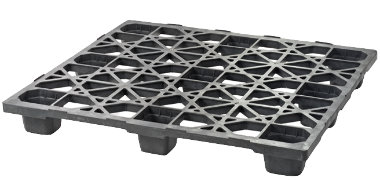


You may want to flip that question around and ask, what plastic material does my pallet application need? That’s because plastic pallets can be made from a variety (and blends) of different materials to support specific environments.
This post is part 3 of a 10-post series on Plastic Pallets 101. (Part 2 is all about plastic pallet functions and designs.)
Plastic Pallet Materials
Pallet materials are often divided into two broad categories:
- Recycled
Recycled plastic made from a blend of post-industrial materials will cost less AND can play a big part in your company’s sustainability efforts. - Virgin
Virgin plastics are unblended resins often reserved for specialty applications. Yes, they come with a higher price tag. BUT… factor in longer-term reusability and not only will the CFO be happy, the virgin material qualifies as an environmentally-friendly choice.
How do I choose a Plastic Pallet Material?
Let’s get back to our earlier point of selecting a material based on how you’ll use the plastic pallet:
- Export
Look for ACM or PO. Short for advanced composite material, ACM is 100% recycled. ACM is comprised of certain polyolefins (PO), the most widely used type of plastic. This material has a low price point but also a lower lifespan making them a popular choice for when you don’t expect to get the pallet back. - Warehouse
Ask for HDPE or high density polyethylene. HDPE (sometimes called just PE) is the most common resin in plastic pallets. This material has all the properties most standard applications demand: durability, stiffness and moisture resistance. HDPE is a great choice for the demanding and repeated use found in warehouses. - Unsupported Racking
Your best choice is HDPP (high density polypropylene) which is often simply identified as PP. PP holds up well to heat and harsh chemicals. It has properties similar to PE but PP is more rigid, making it an excellent choice for racking when no center support is available. - FDA or Pharma
Plastic pallets made from recycled materials often satisfy general FDA requirements for food and pharmaceuticals: easy to clean, non-toxic and in good repair. If your product is making direct contact with the pallet, you may need to limit your search to a non-blended HDPE virgin material to meet stricter federal requirements for sanitizing and more. - Freezer
Most plastic materials can survive freezing temps, but deep freeze applications can make some materials brittle. Start your search with unblended HDPE or LDPE or hit us up to ask, when do I need true freezer grade plastic pallets?
Plastic Pallet Materials as a Sustainable Choice
Along with the popular materials noted above, molders are experimenting with all sorts of recycled plastic blends with a goal of keeping physical properties solid while saving cost. Because plastic pallets can be made from recycled material and are eminently recyclable, they can play a big part in your company’s sustainability efforts. And, as a reminder, even virgin materials can meet sustainability goals due to long-term usability.
Have a question about which plastic pallet material you should choose? Let’s connect down below. Also, be sure to catch our quick Plastic Pallets 101 Video. In just 10 short minutes, we introduce you to even more basics about choosing plastic pallets.
Early in my career, I was introduced to the CEO of the company that had just hired me to help make plastic pallets. “Mr. Leo” as he was affectionately called, shook my hand and welcomed me to the team. To help me get my head around what I had just gotten myself into, Mr. Leo said, “Our pallets cost a lot of money. But remember. They are the cheapest product out there!”
Plastic Pallets as an Asset
We were manufacturing a heavy-duty, virgin material plastic pallet designed to last for many years. We were up against products that cost considerably less at the time. So how did we justify what amounted to a capital investment, when the market was full of pallets that were treated as an expense item?
-
Asset Retention
Pallets that are designed to last cannot be lost or stolen. Develop a plan to retain control of your pallets. -
Documentation
Treat your pallets like the assets that they are. Count them. If you send pallets to another location, document the quantity and establish accountability. -
Communicate Expectation
Folks along the supply chain need to know the nature of the model. Let them know that a return on investment can only be achieved by keeping the pallet in service day in and day out.
Let’s Look at two Examples of Savings:
-
From $2.33 per Use to $0.15 per Use
A medium sized grocery chain (86 stores) was using wood pallets in their upstream distribution. They were using A-Grade used pallets that cost $7 each. They were getting 3 uses per pallet before they had to be taken out of service. Roughly $2.33 per use. They invested in a super durable plastic pallet that cost $69 each. They estimated the pallets moved 3 times a week and lasted a minimum of 3 years. Roughly $0.15 per use. -
Paid for itself in 1 Year
Second example, a food grade printing outfit. The plant printed everything from cereal boxes to french fry sleeves. Wood pallets were being used to ferry material around the plant from one process to the next. Weekly budget to keep the plant in wood pallets, roughly $2,000. The plant manager convinced his financial team to spend $50,000 on enough durable plastic pallets to do the job with the expectation that the pallets would last at least 3 years. The model paid for itself in year one, cutting the overall spend by two thirds.
Plastic Pallets and the Circular Economy
Factoring in cost-per-use, plastic pallets offer up a sustainable choice. You’ve learned how a longer lasting pallet (3 uses vs 3 years in our example above) saves money. Now consider how that durability combined with recyclability minimizes waste. That’s the formula for how plastic pallets can close the loop and support a circular economy.
The Obvious Savings are Glaring
Ready to learn more subtle ways that the right pallet can save you money with a cost-per-trip analysis? Let’s connect. While you’re at it, get advice on how to manage a closed loop pool of durable pallets for an environmentally-friendly solution. Tell us about the pallets currently in your closed loop environment or ask questions below.
It has been a tough but successful year and you have decided to take the wife and kids to Disneyland. Yes, the original one in California. You’re packing the kids into the hotel and you see this big sign next to the door that says something about the premises containing chemicals known to the state of California to cause cancer and birth defects.
WHAT???? Gloria! Grab the kids! We are outta here!
Understandably, that can certainly be the reaction if you don’t know anything about California Proposition 65, how the warnings came about, and what all this means to you, Gloria, little Timmy and Faith.
What is Prop 65?
The official name of Proposition 65 is the Safe Drinking Water and Toxic Enforcement Act of 1986. Commonly referred to as Prop 65.
Prop 65 is intended to provide California residents with information about compounds in the environment around them that might be harmful. Prop 65 dictates that businesses with more than 10 employees that sell products in the state are required to provide “clear and reasonable warnings” about a chemical’s ability to cause cancer, reproductive harm or birth defects. And this goes for buildings like hotels as well.
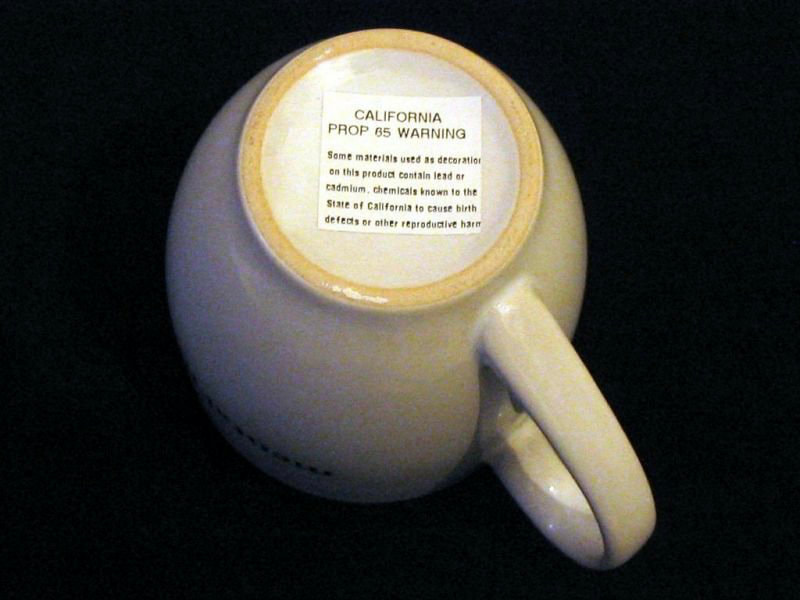
The lead and cadmium found in this mug prompted a Prop 65 warning label.
What’s on the List?
The state maintains a list of about 900 chemicals. Briefly, the list might contain:
- Additives or ingredients in pesticides
- Common household products
- Drugs, food or dyes
- Solvents
- Chemicals in manufacturing or construction
- Byproducts of chemical processes
What does any of this have to do with Pallets?
As one of the most ubiquitous items in American industry, pallets are everywhere. And if they are being sold for use in California, just like Gloria’s nail polish remover or Timmy’s stuffed bear, you may have to prove that the pallets you are selling do not contain chemicals on the list (or furnish a warning if they do).
Wood pallets have been known to be treated with chemicals to control pests. Plastic pallets have been known to contain additives to make them flame retardant. In both cases, these chemicals might well show up on the Prop 65 list and would require a warning.
Be Prepared to Answer P65 Questions about Pallets
As it turns out, pest infestation in wood pallets can be abated through heat treatment. Plastic pallets that are required to be flame retardant are now manufactured with a new generation of additives that do not appear on the Prop 65 list.
But like our friend visiting Disneyland, knowing makes all the difference. Don’t be shocked when you are asked about the Prop 65 compliance of your pallets. Be prepared.
If you still have questions about how to stay in compliance with Prop 65 regulations with your pallets, let’s connect.
Use of Disneyland Prop 65 Warning by Patrick Pelletier and Lead or Cadmium – California Proposition 65 Warning by Hannes Reich licensed under the Creative Commons Attribution 3.0 Unported license.
So you’ve been shopping for plastic pallet containers. You’ve pinned down the footrpint and functional needs. But you’ve noticed that nearly all of these industrial bulk containers have open tops. Are lids an option? Do you even need a lid? The answer (as you probably already guessed) is that it depends.
Stack Pallet Containers with or without a Lid
I’ll cut to the chase. Plastic pallet containers can stack without lids.
These plastic bulk boxes are designed to stack safely. The bottom is inset to nest about a half inch into the container below it. This nesting feature allows you to move stacked containers without concern of a container slipping off the stack. You may still want a lid (they’re molded for stacking). Reasons for and against lids are below:
Reasons for a Lid
If your product needs to stay protected from damage or environmental elements like dust, a lid is in order. You may also want to use lids to prevent theft when shipping pallet containers. Many customers band the lid and container together. Others add modifications including hinges and padlocks for beefing up their loss prevention efforts. Lids also make the container resistant to weather damage. While not all containers are waterproof, your contents should be safe during transit if moved in inclement weather.
Choose a lid if you need:
-
product protection
-
security
Reasons for NO Lid
Some plastic bulk containers are designed with a drop gate for easy access to contents. Unfortunately, when you put a lid on your container, you can no longer open the drop gate. The lid waterfalls over the outside edge of the container by about two inches. If the container will be in transit, however, the waterfall (or overhang) is an advantage because it provides security. You don’t have to worry about someone accessing your contents while the container is moving.
Further, agricultural users concerned about moisture and mold will benefit from using pallet containers with vented walls and no lid. A vented container allows moisture to escape, reducing environmental conditions conducive to mold and decay. This helps to keep the produce fresher longer. This is explained in more detail in a previous post about using plastic containers for agriculture.
Skip the lid if you need:
-
easy access to contents
-
better air flow
Hold onto those Lids
Lid loss can be an issue so you’ll want to come up with a system for keeping track of your container toppers.
Companies that use a lot of pallet containers have the option to emboss lids with their name or company logo. This helps to claim ownership and prevent loss of the lid itself. To qualify, you must be a heavy container user. The minimum order for containers with customized lids is two truckloads (about 200-500 containers depending on size).
Need Pallet Containers (with or without a Lid)?
Shopping for pallet containers? Let’s connect. Tell us about the pallet containers currently in your system and how you use them. We’ll help you decide if buying lids is the way to go.
OK, so you run a cold storage operation and the FDA has been in a time or two talking about the FSMA and other interesting subjects. So far you are in full compliance, but you thought it might not be a bad idea to look into switching to plastic pallets for your sub-freezing storage.
Where Do I Even Begin?
No reason to panic. The truth is that MOST plastic pallets available on the market today can withstand temperatures below 32°F without any difficulty. You are at minus 30°F? Holy Cow – that is cold! And, yes, you WILL need a true freezer grade pallet.
So what makes plastic freezer pallets truly freezer grade? Captain Obvious will tell you, the one that works well in a freezer. One that has the stiffness to do its job as a pallet but one that does not get brittle in cold temperatures. Duh.
Here are the two main factors that will impact performance in the freezer:
-
Material
Simply put, some plastic resins do better in the cold than others. More on that in a bit. -
Wall Thickness
Some of the foibles of polypropylene (PP) and other less cold-resistant resins can be overcome simply by making the parts thicker. A PP part at 3/8″ thick will be less likely to fail in the cold than say one at 1/8″ thick.
Tell Me More About Plastic Resins for Freezer Use
As I mentioned above, brittleness must be considered in material choice. Here’s some good info to have:
-
LDPE and HDPE
Both do well in the cold. Not unusual to see brittle thresholds of -50°F for some grades. -
PP and PVC
These can become brittle even at moderately cold temperatures. Many generic PP grades will get brittle at around 32°F. -
Polystyrene
This gets brittle if you give it the cold shoulder. -
Structural Foam
Any resin that has been foamed (as in structural foam) will also become more brittle in the cold than a part molded of the same material but not foamed.
What About Recycled Material?
Good question. Most applications can be adapted to pallets made from recycled plastic material. When it comes to freezer grade, however, material engineers need to be consulted.
The same material that does well as a virgin, unblended resin will lose physical properties each time it is recycled. To combat this, the better engineered pallets will add an elastomer filled resin like TPO to the mix. In layman’s terms, this is like adding rubber to the plastic. The chemistry behind all of this can be like voodoo and is often a well-guarded secret. For us, it means the pallets will still be stiff enough to do their jobs, but will not get brittle when they are cold.
I Think I Need a True Freezer Pallet. Now What?
To recap, if your work environment is really cold, say lower than 0°F, you should consider a true freezer grade pallet when buying plastic. If you intend to use a pallet molded from virgin material, ask specific questions about the material from which that pallet is molded. Working temperature ranges are listed for all plastic resins, and your supplier should have that data in writing. If you are considering pallets with recycled content, look for a supplier that offers an engineered solution, specifically addressing your low temperature needs.
Still confused? Best to reach out to a pallet professional. Post your questions here and let’s connect.
In previous discussions about pallets, I touched on the nature of the load that a pallet might be expected to handle. If you are a pallet geek like me, the term “unit load” is often used to describe the goods that are configured in such a way as to be easily handled by that pallet.
So, I guess the unit load is and has always been associated with pallets, right? Well, not exactly. Although we can trace the use of pallets all the way back to ancient times, the common use of pallets to handle the unit load did not get going until World War II.
What Kinds of Unit Loads did we see Before the Pallet?
Everything listed below handled goods on its own before the introduction of pallets. Each device offered an advantage for the specific material needing transport as a unit:
- Barrels
Popular for liquids but also used for such things as nails and chains. - Bales
Work great for easily bundled materials like hay and cotton. - Crates
Custom sizes and configurations accommodate just about any material needing to be moved. - Sacks
Gained popularity for handling granulated materials like flour and coffee with the invention of the sewing machine in 1846.
While useful, the bottom line for all of these devices is that human labor was still the primary engine that moved goods in and out of wagons, rail cars, ships and later trucks.
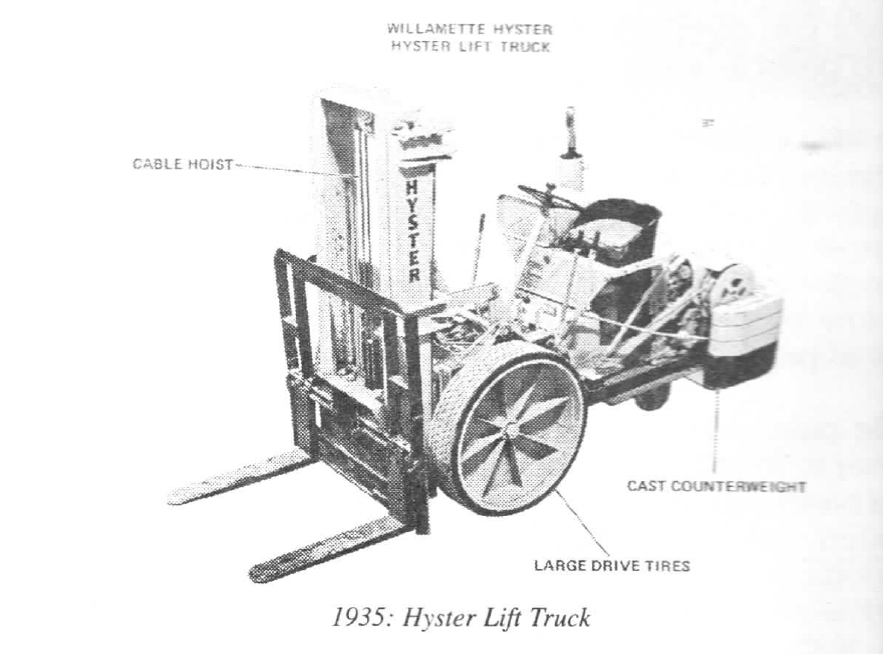
Acceptance and support for early lift truck vehicles started off sluggish.
Cheap Labor Slows Demand for Lift Trucks
By 1915, there appeared a number pf patents for “lift truck” type vehicles. By 1935, both Clark and Hyster had developed vehicles that anyone would recognize as a lift truck.
But acceptance of the new palletized unit load was still slow. In the 1930s there existed armies of unemployed men willing to work hard in bucket brigades for very low wages. Very cheap labor coupled with a lack of investment capital provided little impetus to move this technology forward.
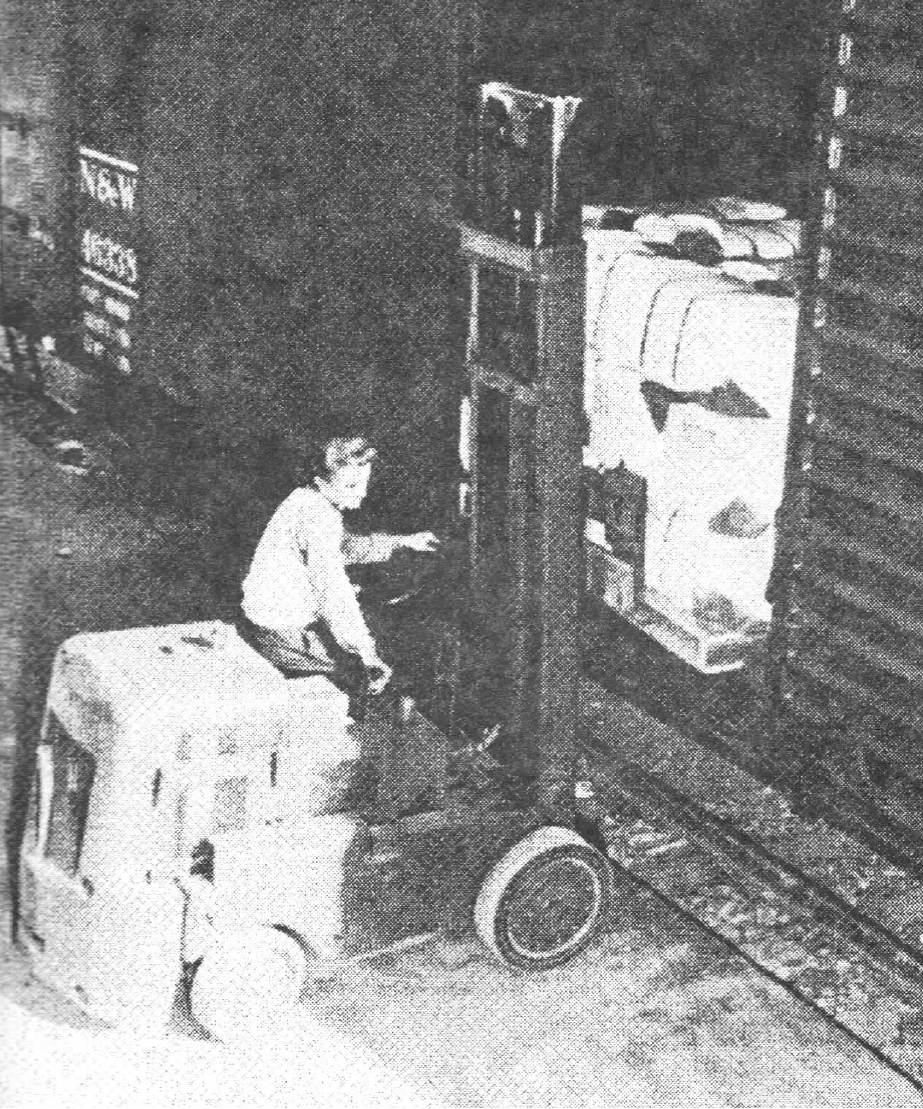
Loading of baled uniforms during WWII
WWII Drives Growth of Lift Trucks and Palletized Loads
The demands of the second World War changed everything. Manpower was now needed for the war effort. The combination of the palletized unit load and the lift truck meant huge volumes of ammunition, uniforms and provisions could all be moved in units by a single driver.
By 1941, it is estimated that 25,000 lift trucks were being used by US armed forces, with an equal number being added in each of the war years that followed.
In 1942 the Office of the Quartermaster General ordered 1 million pallets but fulfillment proved difficult and unitizing introduced additional challenges. By 1944, it was determined that petroleum products and combat rations were the most successfully palletized supplies. Similar to current day practices, strong and uniform containers of supplies were strapped together in flat-topped loads for efficient stacking and handling by the lift trucks.(1)
Today’s Unit Load
Barrels, bales, crates and sacks still unitize loads today. The biggest difference? Those devices are now more likely to be found on pallets – perhaps the most ubiquitous device in all of industry.
Want to learn more about how to improve your unit load? Let’s connect.
Photos used with permission from authors: Pallets: A North American Perspective by Rick LeBlanc and Stewart Richardson. Copyright 2003 PACTS Management Inc.
(1) Alvin P. Stauffer, United States Army in WWII (1956)
What makes a pallet rackable? Well, we’ve been spending some time on that question including getting into pallet structure, material stiffness and the seven racking systems we most commonly find in industry.
Part of the discussion included assigned load ratings. In most cases, rackability ratings assume the pallet can safely bridge a span between supporting structures. The ability to dependably and securely bridge that span is what makes a pallet rackable.
Nature of the Load
A common standard for rackability is 2200 pounds or about one metric ton. But what about that ton? Is a ton of feathers the same as a ton of lead? Well, we know they both weigh the same but their nature is very different. And it is the nature of the load that also needs to be considered when determining the suitability of any pallet for its intended use.
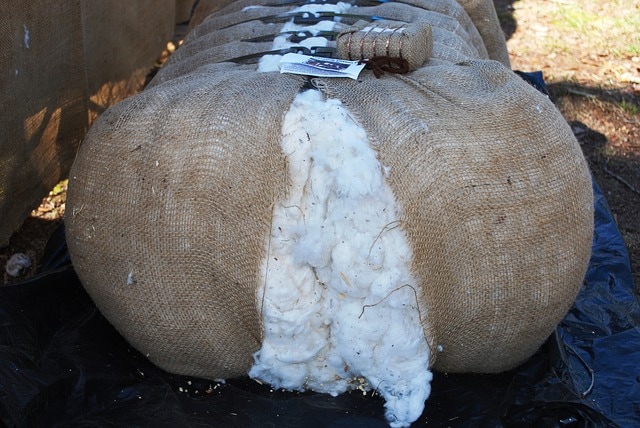
A bale of cotton weighs about 480 pounds.
A Stiff Load can Increase Functional Racking
If we were to make a stack of 40×48 sheets of 3/4 inch plywood on a pallet, it might end up being very heavy. Think about the last time you got an unassembled piece of furniture from IKEA. Holy smokes that stuff can be heavy! But, because our stack is stiff and spreads the load over the entire surface of our pallet, the load actually helps impart stiffness to the pallet. So even though it is very heavy, this type of load increases the functional racking load rather than challenging it!
By contrast, if the load is not in of itself stiff, it can cause a problem. Yep, even if we evenly spread the load across the surface of a pallet. Now what? Well, unitizing a load with stretch wrap can take a challenging load and make it less so. The stretch wrap makes the load stiffer, more like our stack of plywood. But, no matter what, our stack of plywood will always be stiffer than say, small bottles shrink wrapped in bundles and stacked on a pallet.
Challenging Loads
In addition to our example of stacked bottles in stretch wrap, here are some of the more common challenging loads for rackable pallets:
- 5 gallon pails
- Steel or poly drums
- Bulk bags
- Smaller bags of seeds or beans
- Any single heavy item placed in the center of the pallet (see my story below on this one…)
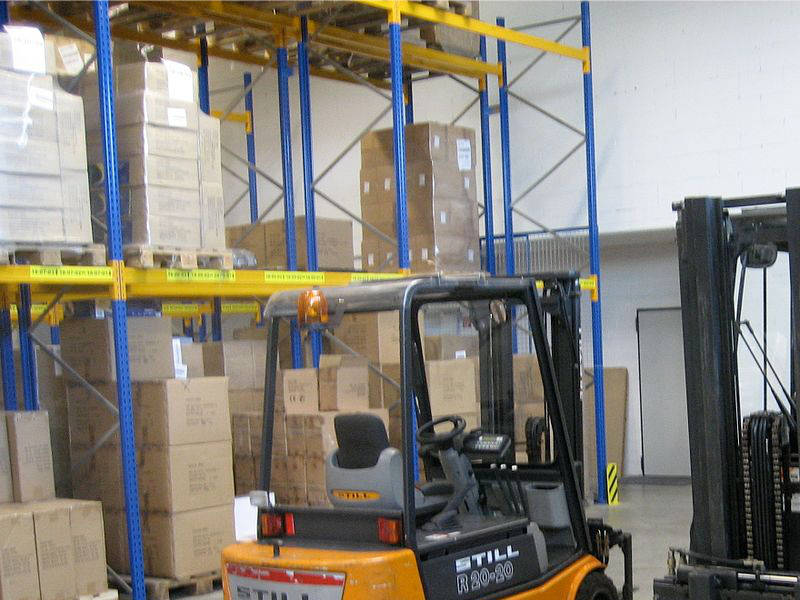
Pallet loads unitized with stretch wrap and placed in racking system.
Story time… I was once shown a 3,500 lb lift truck counterweight and asked to propose a pallet to handle it. I had a GREAT solution. Of course, the picture in my mind is the weight laying flat on its back and spread out over the surface of the pallet. I sent over a sample pallet and was mortified when I got an email showing the pallet in total failure! What happened? The counterweight was placed upside down with only three 4×4″ points of contact on the pallet. Heaven knows what the PSI must have been on those three points, but I can tell you the highly-rated pallet folded like a cheap camera!
Getting it Right the First Time
To recap, the nature of the load must be considered when determining the suitability of a pallet for any given application – especially if it is said to be “rackable”.
Load rating will generally assume the loads will be:
- Unitized
- Distributed evenly over the surface of the pallet
But even then you need to ask yourself the right questions. For example, will we be moving a ton of feathers or a ton of lead? The answers will help you get it right the first time.
If you want help with your load questions, let’s connect. And, watch for my next post on the history of the unit load and how we got here in the first place.
Use of metal racking photo used with permission from our friends at Warehouse Rack & Shelf, LLC.
Use of Forklifts in Warehouse photo by Mdornseif licensed under the Creative Commons Attribution 3.0 Unported license.
So the next time you order up some sweet potato fries with a dusting of cinnamon you can thank the smooth and moisture-resistant qualities of ventilated plastic containers for keeping those taters fresh. That’s because the way these spuds are planted, harvested and stored can all have a significant impact on the quality of the sweet potato.
From Seedling to Harvest to Curing
According to USDA figures and the North Carolina Sweet Potato Commission, 400 farmers planted 88,000 acres of sweet potato in 2023 worth about 170 million dollars to North Carolina’s economy. That’s roughly half of the US supply. How exactly do plastic bins help?
Well, sweet potatoes are grown from “slips”. These are live seedlings and must be kept in containers that will not collect any moisture. Ventilated bins are required for this step. Later, when the potatoes are harvested, they again need to be kept in ventilated bins.
Now, this part may surprise you. Most producers cure the sweet potato to be “sweet” over the course of several weeks. That’s right, these tasty tubers are not naturally sweet. Who knew? They are kept in a climate controlled environment where the potatoes need to be exposed to exacting levels of humidity and heat. And, you guessed it, ventilated bins are used for the curing too.
Plastic vs Wood Agricultural Bins
A plastic ventilated bulk bin for agriculture offers these top 3 improvements over wood:
-
Moisture Resistance
First and most importantly, plastic bins do not hold moisture. Wood not only absorbs moisture but chemicals too. Wood bins “weather”, resulting in rough surfaces which can harbor various disease-causing organisms. Plastic bins are smooth and can be sterilized. -
Better Ventilation
The ventilation slots in a plastic bin amount to 7–11% of the surface area compared to plywood bins at only 1.5%. With better ventilation, you can stack your produce closer together and still have sufficient air movement through the stacks. Plus, an interlocking system provides safer and possibly higher stacking. -
Safer Handling
Plastic has no nails or splinters to puncture food or injure handlers. The bin floor and walls are smooth. At 30-40 lbs each, plastic ventilated bins are lighter and easier to lift than wooden agricultural bins.
Ready to Switch to Plastic Vented Bins for Agriculture?
With proper handling, you can expect plastic agricultural bins to last about 15 years. And, when they’ve reached the end of their useful lifespan, they can be recycled. Always consistent in size, plastic ventilated bins will not warp, splinter, or weather making them a great choice for sweet potatoes and the agricultural industry.
Do you use plastic bins in agriculture or have questions? Let’s connect. Tell us about the fruit or veggies you harvest and the containers currently in use.
In my last post we talked about how the STRUCTURE of a plastic pallet can impact the way it interfaces with pallet racking. In this discussion, we will address MATERIAL as it relates to the rackability of a plastic pallet.
For our purposes here, we will assume our pallets need to bridge an open span in a rack. If you haven’t been following along in this series, check out my 7 Ways to Use Rackable Pallets post to get up-to-speed.
Stiffness Matters
Again, assuming our pallet has the proper structure to target on the rack safely, what is the main pallet characteristic for allowing it to bridge the span without deflecting? STIFFNESS! And yes, this actually is a technical term that can be measured.
Plastic resin producers have ways of testing various plastic materials and coming up with numbers to reflect properties best suited to an application. These plastic materials can vary in:
- Stiffness
- Stretchiness
- Stress resistance
- Squishiness
- Toughness
Loads can Complicate Things
The bottom line for us is using a material that is stiff enough to bridge our span carrying a load. Load? Did someone mention a load? For our purposes here, we will assume our loads are evenly distributed across the surface of our pallets. The nature of a load can certainly impact the performance of a pallet, but the subject is complex enough that we will leave load configuration for another day.
Stiffness can be Achieved in Several Ways
Native Stiffness
Native stiffness is measured by its (are you ready for this?) flexural modulus of elasticity. In English, this means how the material bends when subjected to force. Some materials are simply stiffer than others depending on their molecular makeup. So we just choose the stiffest possible material available, right? Not so fast! When it comes to pallets, we need to balance stiffness with toughness and impact resistance.
For most commodities plastic, if we get really really stiff we also get brittle and that is bad news to a device that is intended to work in high impact environments. This would be a good time to mention that native stiffness can be affected by temperature. When tested for the properties mentioned above, most labs use 73 degrees F as the ambient temperature during a test. Hotter environments can cause plastic to “creep” increasing deflection over time. And let’s not forget that stiffness increases as vertical depth increases. For our purposes we will assume pallets with a height of about 6 inches. Deeper would be stiffer, but pallets that are too high steal valuable load space.
Loading or Filling
Plastic material can be fortified with a filler material that will add stiffness and create what is essentially a plastic composite. Some fillers like powdered minerals or cellulose fibers will add stiffness but can also make pallets less impact resistant. Short glass fibers can add stiffness but might be shed if subjected to impact.

Usually square and made of steel, rod inserts can add stiffness to a plastic pallet for racking.
Reinforcement
If a manufacturer has settled on a plastic material that has all of the physical characteristics he desires except stiffness, a pallet can be made stiff by introducing a bar, rod or beam into the structure of the pallet for achieving the stiffness and load rating desired. The most common reinforcement material is steel. These square tubes are placed in either the deck or the bottom frame of the pallet in the direction of the span. In some cases, rods can be placed in both directions making the pallet fully rackable regardless of how it is placed in the rack.
We also find pallets strengthened with fiber reinforced beams. These little I-beams are made of dense thermoset resin reinforced with long fiber glass. As these beams are encased in the structure of the pallet, impact to the beams themselves is rarely an issue.

Fiber reinforced beams like these are better protected from impact due to being encased in the pallet.
Most Plastic Pallet Materials allow for Rackability
In conclusion, it is safe to say that most commodities plastics used to mold plastic pallets today allow a certain degree of rackability with only a well-designed structure and the native stiffness of the plastic. A common target “racking load rating” for a 48×40 full frame plastic pallet is 2200 pounds. Although not universal, this is a common target. Most certainly if higher racking ratings are required, the introduction of either fillers to create a stiffer composite or some form of reinforcement rods would be needed.
If you still have questions about how material or structure apply to the selection of a rackable plastic pallet, let’s connect. And, be sure to watch for my next post on the unit load itself and how load configuration can impact how a pallet will behave in a rack.
In my last post we discussed 7 basic types of pallet racks. Now that we know EVERYTHING (well, almost everything) there is to know about pallet racking, let’s talk about how pallets interact with racks and why structure matters.
When is a Pallet Rackable?
We often hear the term rackable plastic pallet but what does that really mean? Traditionally we think of wood pallets as setting the standard for rackability. Simply stated, any pallet, plastic or wood is rackable when it has the capacity to bridge a span. Remember the span? This is the open space between supports in a rack. Let’s recap:
- Beam Rack
span is the distance between the front and back beams parallel to the aisle - Edge Rack
span is the distance between rails or edges perpendicular to the aisle - Roller Rack
span is the distance between roller sets, often like the edge rack but may have a center roller set eliminating the span - Push Back Rack
span is determined by the design of the platform - Flow Rack
like a roller rack but with a pitch to move pallets along by gravity - Cantilever Rack
span is determined by the space between perpendicular beams - Supported Rack
no span
So is it that easy? As long as the pallet is rated on the spec sheet for a racking load of say 2,200 pounds and our loads match the weight, we are good to go, right? Not necessarily.
Pallet Design Matters
There are two basic design elements we need to consider:
- Structure
- Material
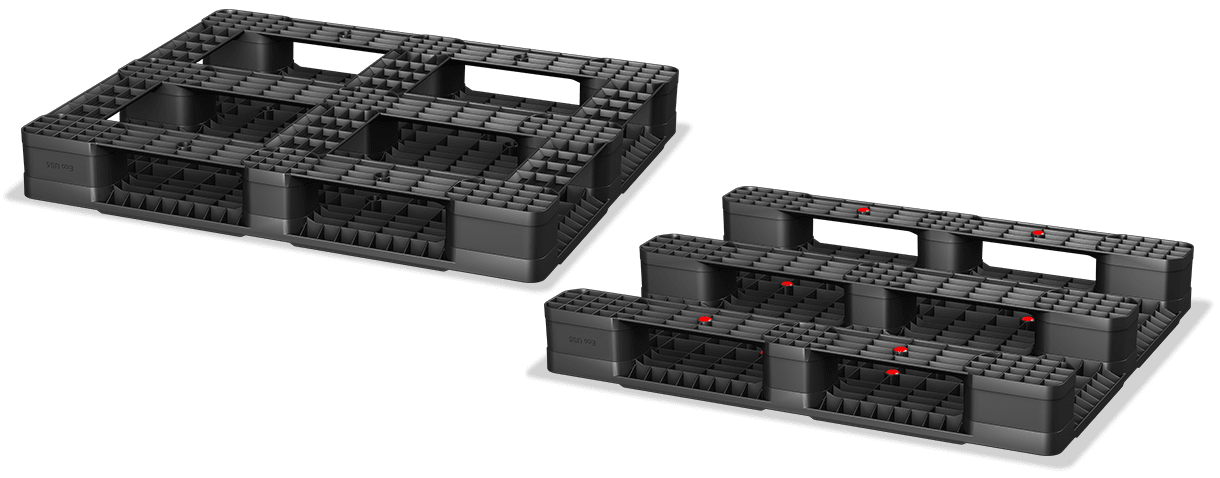
Examples of rackable pallet bottoms: full frame with cruciform base (L) and three runner (R)
Full Frame Cruciform Pallet
If we are looking at a simple beam rack with a front and back beam parallel to the aisle, the underside of the pallet should have enough structure to safely target on those beams. A full frame cruciform pallet provides runners in both directions allowing the pallet to be racked in both dimensions.
Three Runner Pallet
In the case of the three runner pallet, the pallet should only be placed in the rack with the runners perpendicular to the beams.
Pallets for Edge Racks
A pallet must have a bottom structure that will safely rest on the edge. Pallets with a radius on the runners (or heaven forbid a pallet that just has feet for support) is not suitable. Trying to target these types of pallets on racks with narrow edges would be like wire walking. Works if you’re one of The Flying Wallendas, not so much for the average forklift operator.
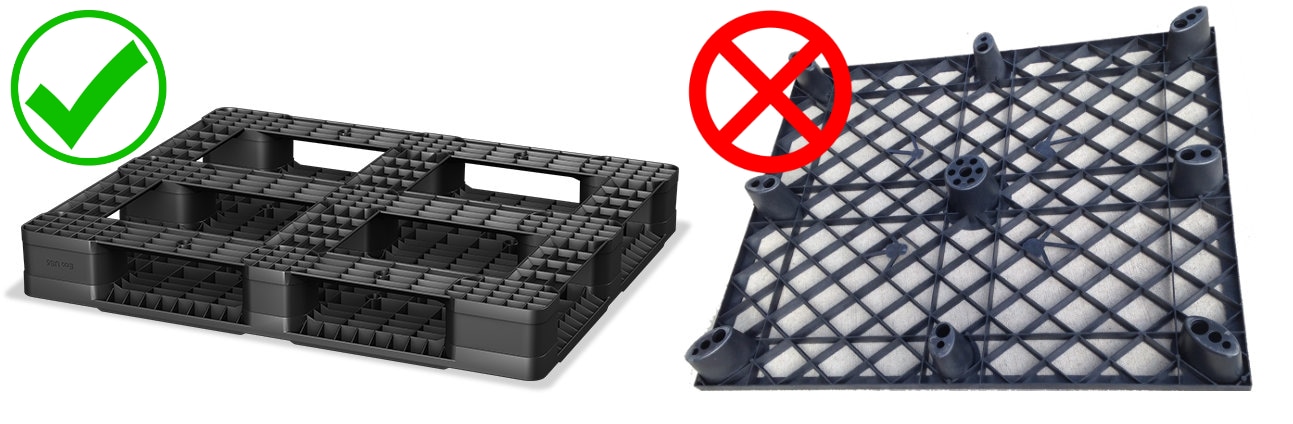
Edge racking? The left pallet is a “go” but it’s a “no go” for the pallet on the right.
Pallets for Roller Racks
Any part of the pallet bottom that interfaces (there I geek again) with the rollers should be smooth enough to flow on the rollers without chattering or bumping along. Why? We don’t want vibration to transfer to the load. Many plastic pallets tend to have ribbing in the understructure. In this case, the tighter the ribbing pattern the better.
Pallets for Push Back Racks
The design of the platform being pushed back determines whether or not a full frame pallet, runner pallet or even a pallet with just legs may be suitable. Some platforms are fully solid while others have a frame like this one pictured below.

Push back rack (L) and cantilever rack (R).
Pallets for Cantilever Racks
Structure matters and the underside of the pallet should have enough length to safely reach from one rack arm to the next. As cantilever racking is often used for longer items like siding or lengths of tubing, pallets would need to be specifically designed to handle those lengthy items in relationship to the racks intended for use.
Pallet Structure is just the Beginning
Now you know the basics of how pallet structure can impact how that pallet will work in the most common racking systems found in industry today. If you still have questions, let’s connect.
Note: For the purpose of this post, we assumed that the pallets were stiff enough to safely bridge the span without unacceptable deflection (bending) cracking or breaking. Watch for my next installment on how we make pallets stiff enough to bridge the span in the first place.
Use of racking system photos used with permission from our friends at Warehouse Rack & Shelf, LLC.